Poor outcomes rarely comefrom one bad negotiation.The bigger issue is inconsistentexecution under pressure.
reactive discounting
Discipline
What strongerlooks like.
Stronger judgement, better execution, and improved commercial outcomes.
Experience
Practical expertise.Real negotiationexperience.
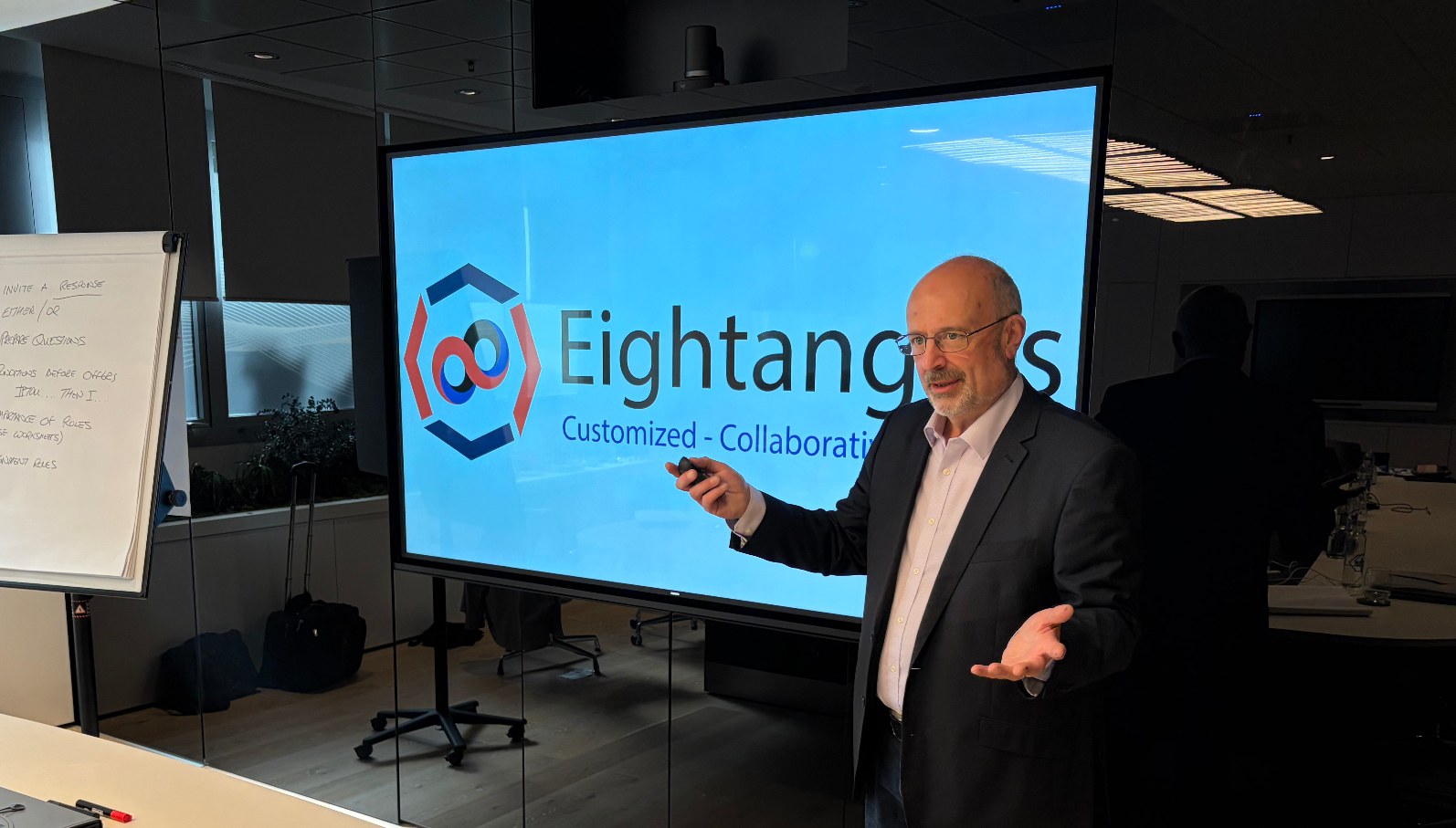
Led by Chris Mitchell — more than 30 years helping commercial teams prepare for, navigate, and improve difficult negotiations.
Trading
Why Eightangles?
Negotiation is not haggling. It is structured trading.
Capability
Strong capability isbuilt, not assumed.
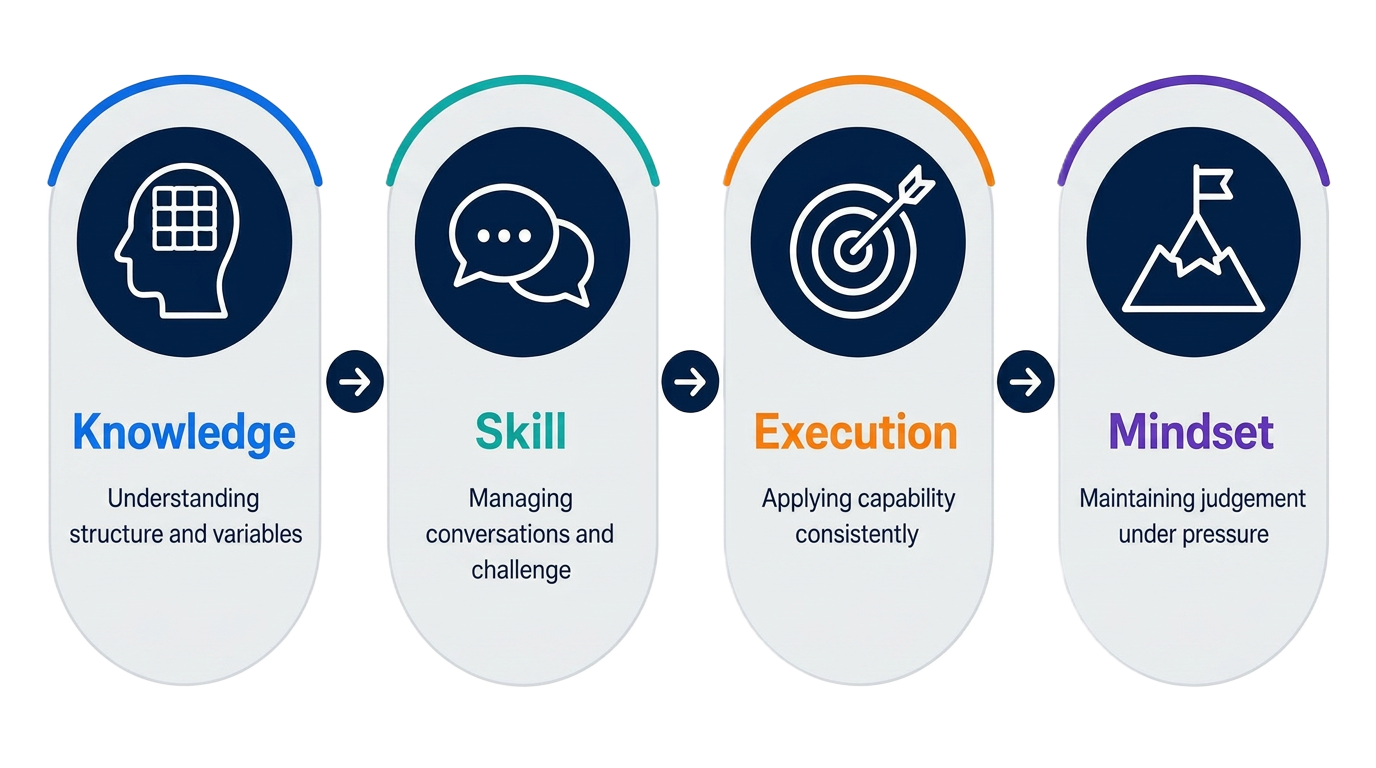
Negotiation performance depends on four connected elements.
Beyond
Sustainable performancerequires more thana workshop.
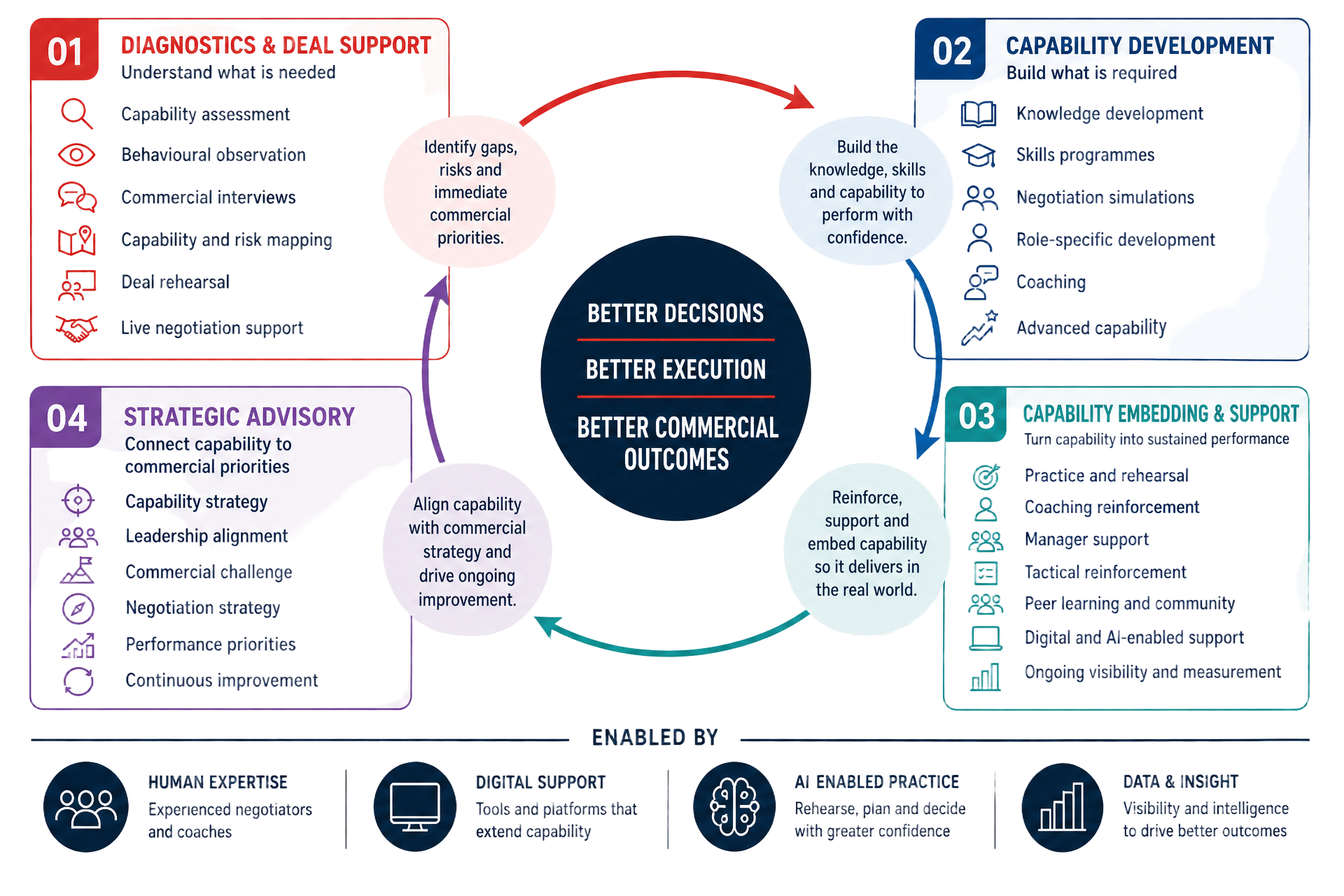
Sustainable negotiation performance is not built through a single intervention. It requires a connected system that identifies what is needed, builds the right capability, supports performance in practice, and improves commercial outcomes over time.
Diagnostic
Before improving performance,organisations need clarity.
The right starting point is not to assume what people need. It is to understand what the organisation is trying to achieve — and what may be getting in the way.
Your team may know how to negotiate. Pressure reveals whether they can perform.
Concept visual — from homepage mockup deck
Most negotiation problems are not knowledge problems.
They appear when pressure disrupts preparation, planning, judgement, and commercial discipline.
Teams stop trading strategically and start conceding tactically.
Stakeholders drift out of alignment.
Momentum starts driving decisions.
Value leaks unnecessarily.
Margins come under pressure.
Deal quality suffers.
Commercial control weakens.
Eightangles helps organisations strengthen negotiation performance so teams make better commercial decisions, protect value, and execute with greater discipline when outcomes matter.
Proof. Examples only — to be replaced with approved assets.
Concept visual — from homepage mockup deck
Example transformation proof
"A global commercial team strengthened negotiation preparation, reduced reactive concession behaviour, and improved consistency across commercially important negotiations."
Example participant voice
"This fundamentally changed how our team prepares, trades, and handles pressure in important negotiations."
Eightangles is led by Chris Mitchell, who has spent more than 30 years helping commercial teams prepare for, navigate, and improve difficult negotiations.
Having supported more than 10,000 commercial professionals and observed more than 7,000 negotiations in practice, the focus is simple:
Help organisations strengthen
Judgement
Discipline
Execution
where outcomes matter.
That experience has shaped a different view of what effective negotiation requires.
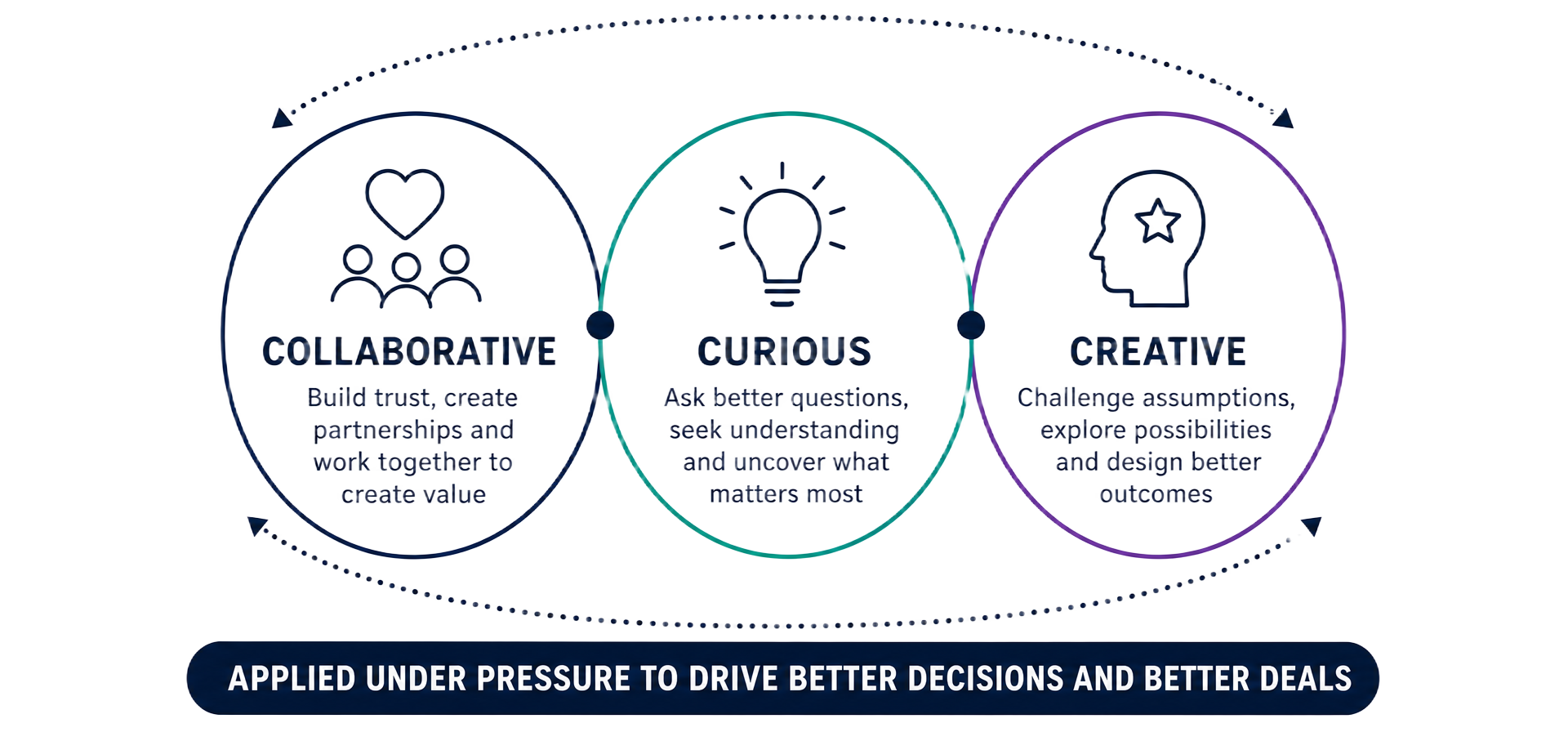
Under pressure, the approach people take shapes the decisions they make—and the commercial outcomes they achieve.
Reactive Negotiation
Focus on personalities
React to difficult behaviour
Concede to regain momentum
Become positional
Protect relationships at the expense of value
Value leakage
Structured Trading
Focus on objectives
Stay commercially disciplined
Remain curious
Think creatively
Trade strategically
Build better deals
Collaborative does not mean soft.
It means staying commercially disciplined when others become positional, reactive, or aggressive—so decisions remain focused on objectives, not personalities.
It also means remaining strategically curious and creative enough to build better deals without giving value away unnecessarily.
But a better approach only works when people have the capability to apply it under pressure.
Negotiation performance depends on four connected elements.
Knowledge alone is not enough. Strong performance requires the skill to manage challenge, the ability to execute consistently, and the mindset to maintain judgement when pressure rises.
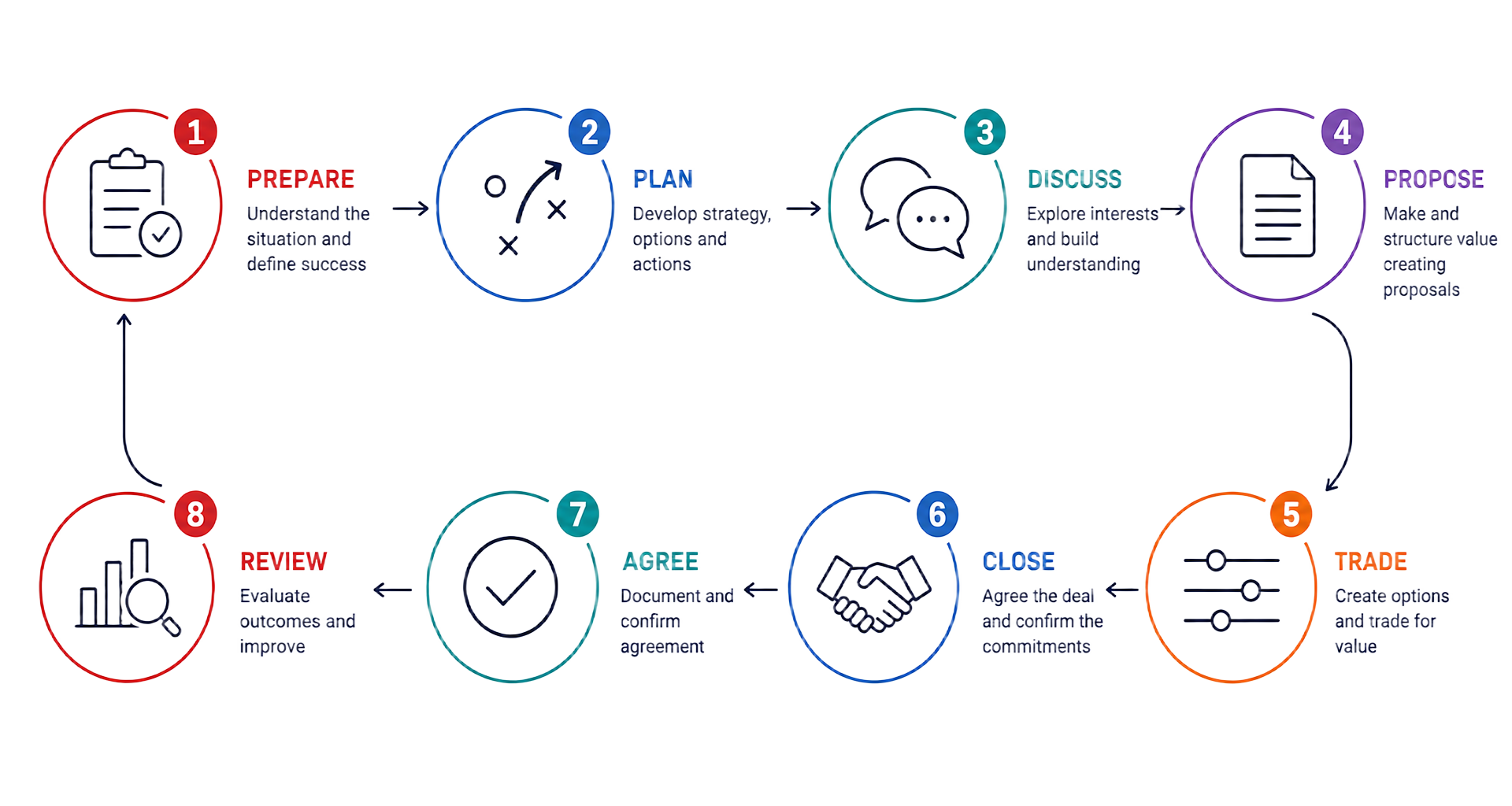
The Eight Angles Framework.
The structure for preparing, planning and executing negotiations with greater discipline.
The Negotiator's Mindset.
The mindset that shapes how capability is applied—particularly when pressure rises.
Building capability takes more than a single intervention.
It requires a connected system that identifies what is needed, builds the right capability, supports performance in practice, and improves commercial outcomes over time.
Because sustainable performance requires more than a workshop.
The Eightangles diagnostic connects commercial outcomes to the capability, behaviour and performance required to deliver them.
01
What outcomes are required?
Commercial priorities and success measures
02
What capability is required for success?
Required performance and behaviour
03
What capability exists today?
Current reality
04
Where are the gaps & risks?
Priority gaps and commercial risks
05
What should be done?
Focused action plan
Answering those questions requires evidence—not assumption.
Evidence, not assumption.
No single source tells the whole story. The depth of evidence depends on the challenge, but the diagnostic can combine what people believe about their capability, what they actually do under pressure, and what the organisation needs them to deliver.
Capability Assessment
Understand perceived capability, confidence and development priorities.
Eight Angles capability assessment
CCC Negotiator's Mindset
Role-specific requirements
Commercial challenges
Individual and group patterns
+
Behavioural Observation
See what people actually do when negotiating under pressure.
Realistic negotiation scenarios
Observed behaviour
Decision-making under pressure
Trading and concession patterns
Strengths and performance risks
+
Commercial Interviews
Understand what the organisation needs capability to deliver.
Leadership priorities
Commercial objectives
Role requirements
Recurring negotiation challenges
Stakeholder expectations
Synthesis & Action Plan
Connect the evidence to capability gaps, commercial risks, priorities and focused action.
Capability strengths
Priority gaps
Commercial risks
Development priorities
Recommended action
Ownership and next steps
A clear, evidence-based view of what matters most—and what to do next.
Not every organisation needs the same depth of diagnosis.
The depth of diagnosis should match the challenge.
Some organisations need an initial view of capability and risk. Others need deeper commercial context or direct evidence of how people perform in practice. The diagnostic can deepen as the complexity, importance and commercial risk increase.
Level 01
Focused Diagnostic
Capability Assessment
→
Level 02
Deeper Diagnostic
Capability Assessment
Commercial Interviews
→
Level 03
Full Diagnostic
Capability Assessment
Commercial Interviews
Behavioural Observation
The objective is not more diagnosis. It is better decisions about what happens next.
Diagnose first. Then decide what support is actually needed.
The findings are brought together to identify strengths, priority capability gaps, behavioural risks, potential commercial exposure and the actions most likely to improve performance.
The right response may be capability development, coaching, deal support, embedding, strategic advisory—or something else entirely.